




.svg)
The transition to a sustainable global economy hinges on a single, critical factor: energy storage. While solar panels and wind turbines capture renewable power effectively, harnessing and deploying that energy reliably requires highly advanced battery technology. We are currently witnessing a massive battery revolution that promises to reshape enterprise operations, global logistics, and power grids.
This transformation goes far beyond simply building better consumer electronics. Next-generation energy storage represents a fundamental shift in how businesses manage their operational processes and secure their supply chains. This article explores the emerging breakthroughs in energy storage, their profound impact on key industries, and the strategic imperatives for business leaders navigating this technological shift.
Moving Beyond Traditional Lithium-Ion
Lithium-ion batteries have successfully powered the digital age. They enabled the proliferation of mobile devices and sparked the first massive wave of electric vehicles. However, this foundational technology is rapidly approaching its theoretical limits regarding energy density and charging speeds. Enterprise demands for longer lifespans, faster charging cycles, and higher power output require a fundamental leap forward in chemical engineering.
Furthermore, traditional lithium-ion systems present significant safety and supply chain concerns. Liquid electrolytes can pose severe fire risks under extreme operational conditions. The heavy reliance on scarce, geographically concentrated materials like cobalt creates persistent geopolitical vulnerabilities. To build a truly resilient global energy infrastructure, the market must aggressively diversify its technological portfolio and invest in new storage architectures.
Breakthrough Technologies Redefining Storage
Engineers and material scientists are actively developing a new generation of batteries designed to overcome the strict limitations of current systems. These innovations will unlock new levels of enterprise productivity and sustainability.
Solid-state batteries represent one of the most promising technological advancements. By replacing the highly flammable liquid electrolyte with a solid conductive material, these batteries offer vastly superior safety profiles. They also pack significantly more energy into a much smaller physical footprint. This drastic increase in energy density will extend the operational range of electric vehicles and mobile enterprise assets, fundamentally changing the economics of electrified transport.
For macro-level industrial applications, flow batteries offer a game-changing operational solution. Unlike conventional batteries that store energy within enclosed cell components, flow batteries store energy in large external tanks of liquid electrolytes. This unique architecture allows for massive, cost-effective scalability. Facility managers can increase total storage capacity simply by adding larger tanks. This makes flow batteries ideal for stabilizing regional power grids and managing heavy industrial-scale energy consumption.
Additionally, sodium-ion technology is emerging as a highly viable alternative for stationary power storage. Sodium is exponentially more abundant and cheaper to extract globally than lithium. While sodium-ion batteries currently deliver slightly lower energy density, their massive cost-efficiency makes them highly attractive for large-scale renewable integration and grid stabilization projects.
Transforming Mobility and Global Logistics
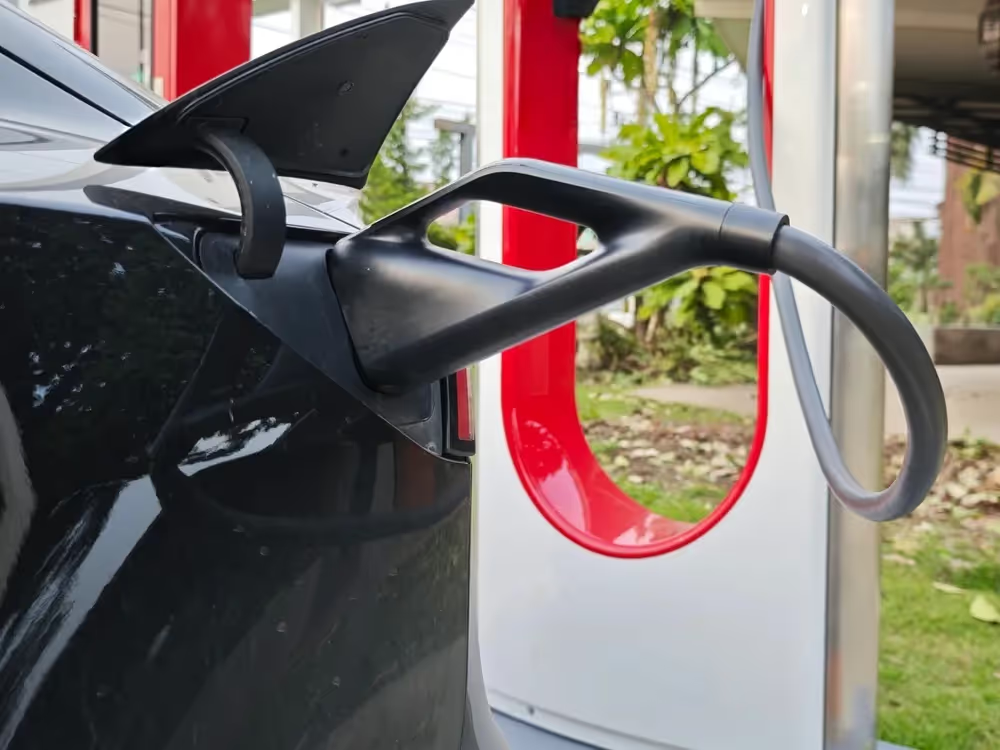
The most immediate and visible impact of this battery revolution will occur within the global transportation sector. Advanced energy storage serves as the absolute linchpin for the total electrification of global mobility. Industry forecasts indicate that global battery demand will surge massively, with projections suggesting a staggering 30% year-over-year growth rate through the end of the decade to support the electric vehicle market alone.
For enterprise logistics and supply chain leaders, this shift translates into a complete overhaul of fleet management strategies. Solid-state batteries will finally enable commercial electric heavy-duty trucks to match the total range and rapid refueling speed of their legacy diesel counterparts. Faster charging times directly reduce vehicle downtime, substantially improving supply chain efficiency and expanding operational margins. Companies must treat their transition to electrified logistics as a core competitive advantage rather than a mere regulatory compliance exercise.

Empowering the Renewable Power Grid
The global push toward renewable energy faces a fundamental, unavoidable challenge: intermittency. Solar arrays only generate electrical power during daylight hours, and wind turbines rely entirely on unpredictable weather patterns. Without robust, high-capacity energy storage, this intermittent generation cannot reliably meet the continuous, rigid demands of modern enterprise data centers and manufacturing facilities.
Advanced batteries provide the necessary buffer between energy generation and energy consumption. Utility-scale storage systems capture excess power during peak production times and discharge it back into the grid during periods of high demand or low generation. This crucial capability transforms unpredictable renewable sources into a highly stable, dependable baseload power supply.
Enterprise leaders can leverage these grid-level advancements to secure their own internal operations. By deploying localized, on-site battery storage systems, commercial facilities can draw power from the grid during off-peak hours when rates are lowest. They can then rely entirely on that stored energy during highly expensive peak operational periods. This strategy, widely known as peak shaving, significantly reduces daily operational expenses while simultaneously enhancing facility resilience against unexpected grid outages.
Navigating Supply Chain and Recycling Realities
Despite the rapid technological progress, the battery revolution faces formidable industrial hurdles. Scaling the production of next-generation batteries requires a massive, coordinated expansion of global mining and refinement capabilities. Securing reliable, uninterrupted access to critical minerals like lithium, nickel, and rare earth elements remains a highly complex geopolitical challenge.
Furthermore, the technology industry must rapidly develop comprehensive recycling infrastructure to manage the impending wave of depleted batteries. Creating a closed-loop circular economy for battery materials is essential for both environmental sustainability and supply chain security. Advanced recycling technologies can effectively recover up to 95% of valuable metals from spent cells. This recovery process sharply reduces the need for new mining operations and directly insulates manufacturers from highly volatile global commodity markets.
Strategic Imperatives for Enterprise Leaders
The battery revolution is an active, ongoing transformation actively reshaping the global industrial landscape. New energy storage technologies will dictate the exact pace of the renewable energy transition and redefine enterprise productivity across mobility, heavy manufacturing, and facility management.
To capitalize fully on this shift, organizations must proactively integrate advanced energy storage capabilities into their long-term strategic planning. Start by aggressively auditing your current enterprise energy consumption and identifying clear opportunities to deploy localized storage solutions. Partner closely with innovative suppliers to secure guaranteed access to next-generation battery technologies before they reach mass market saturation.
Ultimately, companies that treat their comprehensive energy strategy as a critical operational process will gain a distinct, lasting competitive advantage. By embracing the battery revolution now, forward-thinking business leaders can drive unprecedented operational efficiency, drastically reduce supply chain risks, and position their organizations at the absolute forefront of the sustainable digital economy.