





.svg)
Look inside your smartphone, your vehicle, or the servers powering enterprise artificial intelligence platforms. You will find tiny squares of silicon orchestrating every function. Semiconductors represent the beating heart of the digital economy. They dictate the pace of technological innovation, national security, and global enterprise operations.
We are witnessing a monumental shift in international relations. The focus of geopolitical competition has moved from natural resources like oil to advanced technology. The nation that controls the design, fabrication, and distribution of microchips ultimately controls the future of artificial intelligence, advanced weaponry, and global economic superiority.
This article explores the fundamental role of semiconductors, the complex history of their development, and the major players dominating the field. We will examine how these microscopic components reshape global power dynamics and the strategies nations use to secure their digital futures.
The Silicon Foundation of the Modern Life
Semiconductors govern modern life. They process data, manage power systems, and enable connectivity across billions of devices. As global enterprises accelerate their digital transformation efforts, the demand for processing power continues to scale dramatically. Technologies like hyperautomation, generative AI, and the Internet of Things rely entirely on the availability of high-performance microchips.
Beyond commercial applications, advanced semiconductors form the backbone of modern military capabilities. Precision-guided munitions, satellite communications, and advanced radar systems depend on reliable chip supplies. This dual-use nature—critical for both civilian economic growth and military dominance—makes the semiconductor an asset of unparalleled strategic value. Relying on foreign adversaries for these components poses an existential threat to national sovereignty.
A Brief History of Semiconductor Dominance
To grasp the current geopolitical landscape, we must examine how the semiconductor industry evolved. The invention of the integrated circuit in the United States during the late 1950s sparked a technological revolution. For decades, American companies dominated both the design and manufacturing of microchips. They established a vertically integrated model, where single companies handled every step of the process.
However, as manufacturing complexities grew and costs skyrocketed, the industry shifted. In the late 1980s and 1990s, the "fabless" model emerged. Companies focused entirely on designing chips, outsourcing the actual physical manufacturing to specialized foundries, primarily located in East Asia.
This globalization of the supply chain drove down costs and accelerated innovation. It also created massive geographic concentrations of manufacturing power. Governments in Asia heavily subsidized their emerging fabrication industries, building immense ecosystems of suppliers, talent, and infrastructure that became virtually impossible for western nations to replicate efficiently.
The Key Players Defining the Global Market
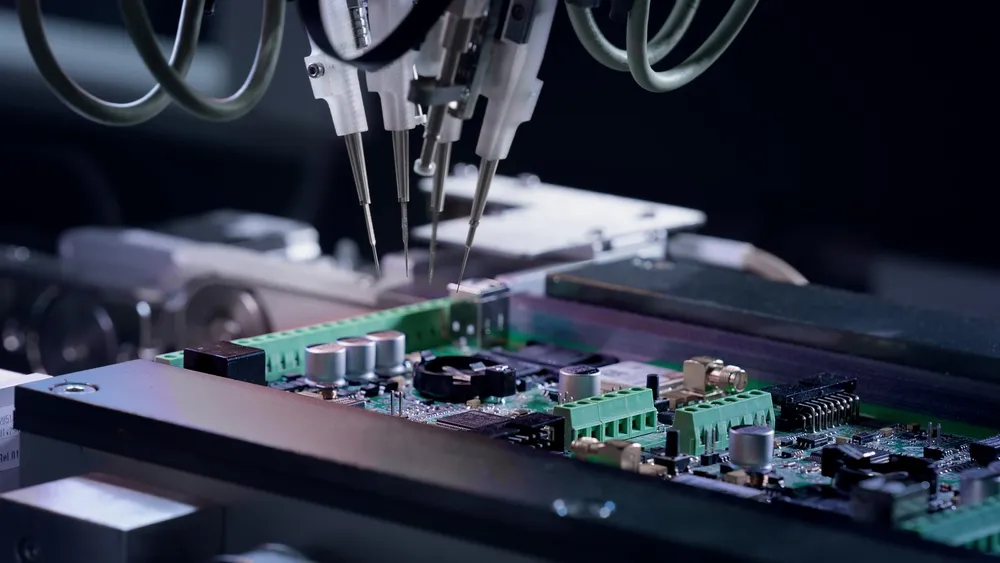
The modern semiconductor supply chain represents one of the most complex manufacturing processes in human history. No single nation controls the entire pipeline, but specific regions hold critical chokepoints.
Taiwan stands at the absolute center of this ecosystem. According to industry analyses, Taiwan produces roughly 60% of the world's semiconductors and a staggering 90% of the most advanced microchips. A single company, Taiwan Semiconductor Manufacturing Company (TSMC), operates as the indispensable foundry for the world's top tech giants. This immense market concentration means that any disruption in the Taiwan Strait would send devastating shockwaves through the global economy.
The United States leads heavily in chip design, electronic design automation (EDA) software, and critical intellectual property. However, its share of global semiconductor manufacturing capacity has dropped significantly over the past three decades.
Meanwhile, Europe excels in highly specialized manufacturing equipment. For instance, ASML, a Dutch company, holds a monopoly on Extreme Ultraviolet (EUV) lithography machines. These massive, highly complex devices are required to print the most advanced microchips.
China remains the world's largest consumer of semiconductors, driven by its massive electronics manufacturing sector. Beijing has invested hundreds of billions of dollars to build a self-sufficient domestic chip industry, striving to reduce its reliance on foreign technology.
Geopolitical Tensions and Global Power Dynamics
The intersection of these chokepoints and national interests created the current global chip war. The friction primarily centers around the strategic competition between the United States and China. Recognizing the military and economic implications of semiconductor dominance, the United States implemented sweeping export controls. These regulations prevent the sale of advanced chips, and the equipment needed to make them, to Chinese entities.
The goal of these sanctions is to stall China's advancement in artificial intelligence and next-generation military technology. The restrictions force allied nations, including the Netherlands and Japan, to align their export policies, further fragmenting the global supply chain.
We now see a clear decoupling of technology ecosystems. The era of a unified, globalized semiconductor market is ending. In its place, parallel supply chains are emerging. This shift forces multinational enterprises to navigate a complex web of sanctions, tariffs, and regulatory compliance measures, adding substantial friction to global operations.
Strategies for Securing Supply Chains
Nations refuse to leave their economic destinies exposed to international supply chain disruptions. In response to these vulnerabilities, governments are deploying aggressive strategies to achieve tech sovereignty.
Massive Domestic Subsidies
Legislators realize that raw market forces alone will not reshore chip manufacturing. The capital expenditure required to build a modern fabrication facility exceeds $10 billion to $20 billion. To offset these costs, governments are stepping in. The United States passed the CHIPS and Science Act, allocating roughly $52 billion in subsidies and tax credits to incentivize companies to build facilities on American soil. Similarly, the European Chips Act aims to mobilize €43 billion to double the EU's global market share in semiconductor production by 2030.
Strategic Alliances and "Friendshoring"
Recognizing that total self-sufficiency is economically unfeasible, nations are forming strategic alliances. The "friendshoring" concept involves relocating supply chains to politically aligned nations. By building coalitions with trusted partners, countries can mitigate the risks associated with geographic concentration while maintaining access to critical resources, talent, and equipment.
Cultivating Domestic Talent
Fabrication facilities require highly specialized labor. Building the factories is only the first step; staffing them with skilled engineers and technicians presents a massive hurdle. Forward-thinking nations are revamping their educational pipelines, partnering with universities to create dedicated semiconductor engineering programs to support this domestic resurgence.
Looking Ahead
The global chip war represents a fundamental restructuring of the global economy. As artificial intelligence and enterprise automation continue to advance, the demand for processing power will only accelerate. Companies must treat their supply chain resilience as a critical competitive advantage.
Business leaders must monitor these geopolitical shifts closely. Understanding the vulnerabilities in your hardware procurement and adapting to the changing regulatory landscape will dictate enterprise success in the coming decade. The nations and organizations that secure their access to these vital silicon components will ultimately define the future of global technology.