




.svg)
For decades, humanoid robots have been a persistent feature of science fiction, representing a distant future of automated assistance. Today, that future is rapidly materializing. Recent breakthroughs in artificial intelligence, sensor technology, and mechanical engineering are transforming humanoid robots from laboratory novelties into viable commercial platforms. We are standing at the cusp of a new industrial revolution, one where a robotics workforce could augment human potential and redefine enterprise operations.
This technological convergence is no longer a theoretical exercise. Leading technology firms and robotics startups are making tangible progress, demonstrating robots that can walk, manipulate objects, and learn from their environment. For enterprise leaders, the question is no longer if humanoid robots will enter the workforce, but when and how to prepare for their integration. Understanding the capabilities, applications, and challenges of this emerging technology is critical for securing a competitive advantage in the automated era.
The Technological Leap Forward
The concept of a bipedal robot is not new, but past iterations were often clumsy, slow, and limited to highly controlled environments. The current generation of humanoid robots represents a monumental leap forward, driven by advancements across several key domains.
Advanced AI and Machine Learning: The most significant catalyst is the integration of sophisticated AI. Modern humanoid robots are not pre-programmed for every specific task. Instead, they leverage machine learning models, including reinforcement learning and imitation learning, to observe human actions and adapt to new situations. This allows them to generalize skills and perform a range of tasks with minimal explicit instruction, moving from structured to unstructured environments.
Dexterity and Manipulation: A robot's utility is largely defined by its ability to interact with the physical world. Breakthroughs in robotic hands, equipped with delicate sensors and fine motor control, are enabling humanoids to handle a wide variety of objects. They can grasp tools, operate machinery, and manipulate items with a level of dexterity that was previously unattainable, making them suitable for tasks designed for human hands.
Dynamic Locomotion and Balance: Replicating human bipedal motion is an immense engineering challenge. The latest generation of robots demonstrates unprecedented agility and balance. They can navigate complex terrain, walk up and down stairs, and recover from unexpected pushes or uneven surfaces. This enhanced mobility allows them to operate safely and effectively within spaces built for people, such as factories, warehouses, and hospitals.
Applications Across Key Industries
The primary value proposition of humanoid robots is their ability to operate in human-centric environments without requiring expensive, purpose-built infrastructure. This versatility unlocks a wide range of applications across multiple sectors.
Manufacturing and Assembly: Factory floors are a prime environment for humanoid robot deployment. They can work alongside human employees on assembly lines, perform quality control inspections, transport materials, and operate machinery. Unlike traditional robotic arms fixed in one position, a mobile humanoid can move between workstations, providing a flexible resource that adapts to changing production demands.
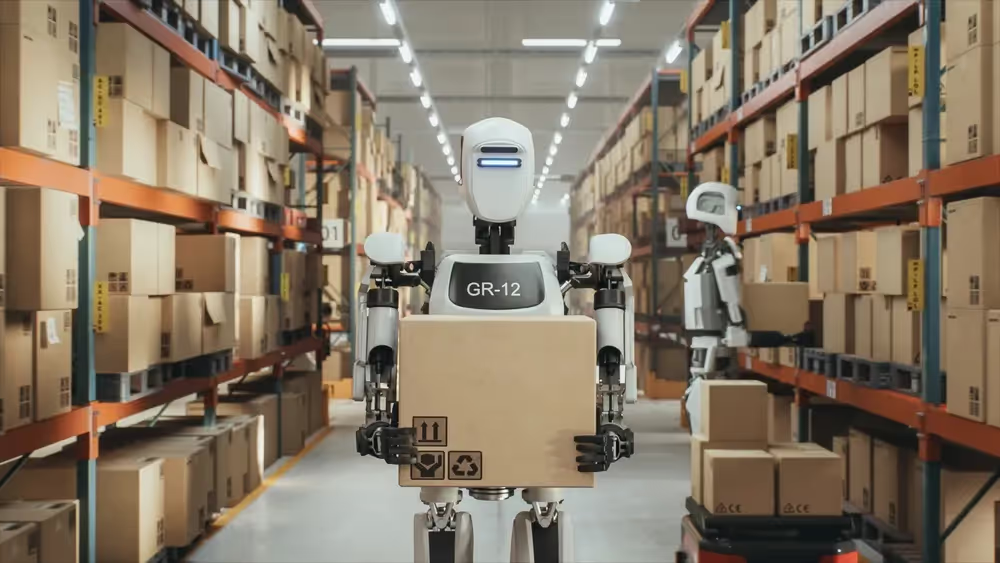
Logistics and Warehousing: The relentless growth of e-commerce has placed immense strain on fulfillment centers. Humanoid robots can perform a multitude of warehouse tasks, from picking and packing orders to loading and unloading trucks. Their ability to handle diverse items and navigate crowded aisles makes them a powerful tool for enhancing supply chain efficiency. Analysts predict the market for humanoid robots could reach billions of dollars within the next decade, with logistics being a primary driver of this explosive growth.
Healthcare and Eldercare: In healthcare settings, humanoids can assist with non-clinical tasks, alleviating the burden on nurses and medical staff. They can transport medical supplies, assist with patient mobility, and disinfect rooms. In eldercare, they can provide companionship and help with daily activities, enabling greater independence for aging populations.
Hazardous Environments: One of the most compelling use cases is deploying robots in environments that are dangerous for humans. This includes disaster response, nuclear decommissioning, and maintenance of offshore energy platforms. Humanoids can perform critical tasks in these high-risk settings, dramatically improving worker safety.
The Challenges and Ethical Considerations
Despite the rapid progress, several significant hurdles remain on the path to a widespread robotics workforce. These challenges are not only technical but also deeply social and ethical.
Cost and Scalability: Currently, the cost of a single advanced humanoid robot is substantial, limiting their adoption to well-funded pilot programs. Achieving the economies of scale needed to make them a cost-effective alternative to human labor will require significant advancements in manufacturing and supply chains.
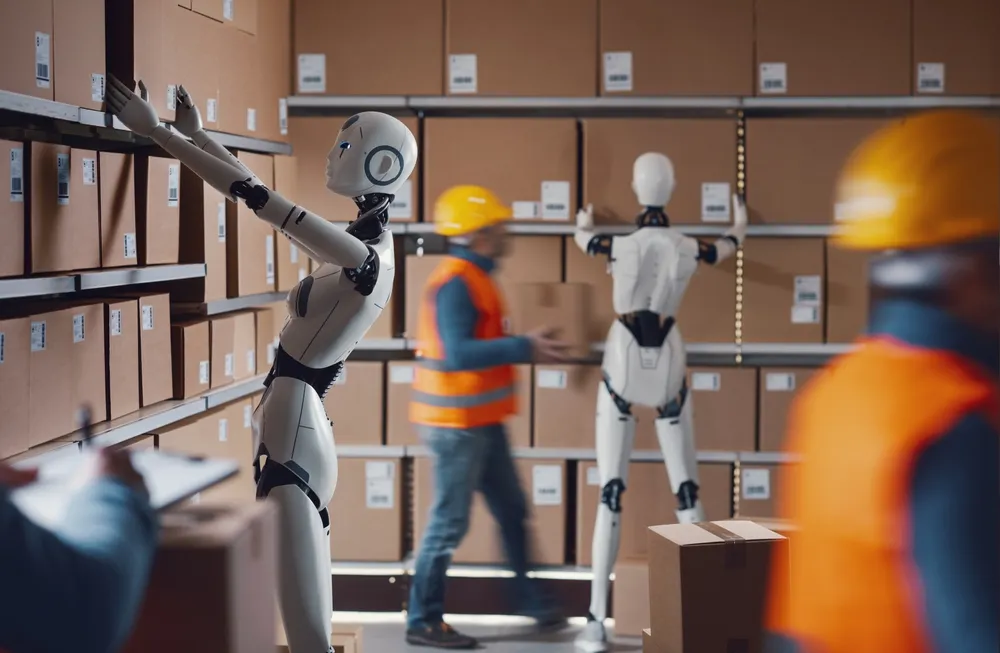
Safety and Reliability: For robots to work alongside people, they must have flawless safety protocols. They need to be able to predict human movements, operate without causing injury, and fail gracefully without creating a hazard. Ensuring this level of reliability in unpredictable environments is a complex technical challenge.
Job Displacement and Workforce Transition: The most profound societal challenge is the potential for job displacement. Humanoid robots are designed to perform manual and routine tasks currently done by millions of people. A recent study by a major investment bank estimates that humanoid robots could perform up to 45% of all manufacturing tasks by 2030. This highlights an urgent need for proactive strategies to manage the transition, including large-scale reskilling and upskilling programs to prepare the human workforce for new, higher-value roles.
Ethical Governance: As robots become more autonomous, we must establish clear ethical guidelines and legal frameworks. Who is liable if a robot makes a mistake that causes financial loss or physical harm? How do we ensure that the data collected by these robots is used responsibly and does not infringe on privacy?
Strategies for Responsible Integration
The arrival of a robotics workforce is inevitable. Forward-thinking enterprise leaders should not view this as a threat, but as an opportunity to augment their human capital and build more resilient operations.
1. Start with Pilot Programs: Begin by identifying specific, high-value tasks within your operations that are suitable for automation. Launch targeted pilot programs to test the capabilities of humanoid robots in a controlled setting and measure their impact on productivity and safety.
2. Focus on Augmentation, Not Just Replacement: Frame the integration of robots as a collaborative effort. Deploy them to handle the most repetitive, physically demanding, or dangerous tasks, freeing up human employees to focus on problem-solving, creativity, and complex decision-making.
3. Invest in Workforce Development: Partner with educational institutions and internal training departments to create clear pathways for reskilling. The skills needed in the future will revolve around managing, maintaining, and collaborating with automated systems. Prepare your workforce for this new reality now.
4. Develop a Robotics Governance Policy: Establish clear internal policies for the ethical and safe deployment of autonomous systems. This framework should address data privacy, operational safety, and accountability before the first robot is deployed on-site.
The era of the humanoid robot is beginning. These machines have the potential to solve labor shortages, boost productivity, and improve human safety on an unprecedented scale. By approaching this technological shift with a clear strategy that balances innovation with human-centric values, businesses can successfully navigate the transition and unlock the immense potential of a collaborative human-robot workforce.